top of page
botox

✨ The Power of Aesthetic Injections

Aesthetic medical injections have become a leading solution for individuals seeking non-surgical facial enhancement. These treatments effectively reduce the appearance of fine lines, wrinkles, and volume loss—restoring a smoother, more youthful look.
In addition to rejuvenation, they can also be used to enhance and define facial features such as the lips, cheeks, and jawline, while improving overall skin texture and harmony.

Core Modalities in Aesthetic Injectable Practice

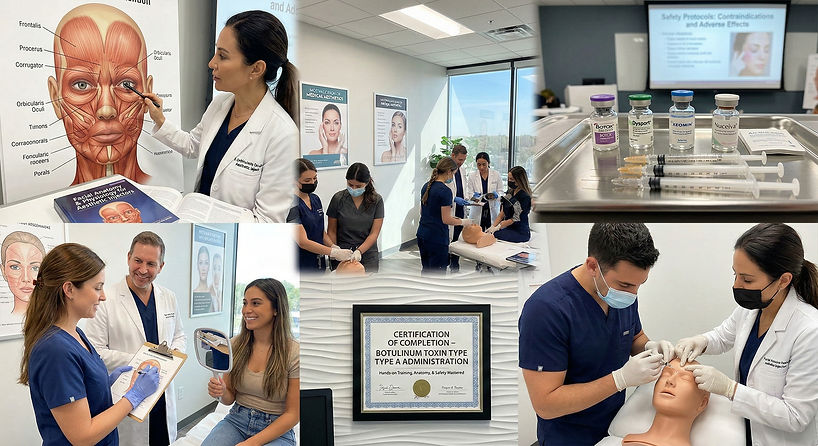
MASA certification programs provide structured instruction in the principal categories of aesthetic injectables:

1. Botulinum Toxin Type A (Neuromodulators)

Botulinum Toxin Type A is utilized to temporarily modulate neuromuscular activity. By selectively relaxing targeted facial muscles, neuromodulators reduce dynamic wrinkles such as:
• Glabellar lines
• Forehead rhytides
• Lateral canthal lines
Training emphasizes:
• Facial muscle mapping
• Dose calculation
• Injection depth precision
• Complication awareness
• Ethical treatment planning
Instruction is delivered with direct anatomical integration and supervised clinical practice.

2. Dermal Fillers

Dermal fillers are injectable biomaterials designed to restore volume, enhance structural support, and improve facial contour. Training includes detailed instruction in product rheology and tissue interaction.
Common filler categories covered include:
• Hyaluronic Acid (e.g., JUVÉDERM®)
• Calcium Hydroxylapatite
• Poly-L-lactic Acid
• Autologous Fat Transfer
Educational focus includes:
• Plane-specific injection techniques
• Vascular risk zones
• Structural versus superficial placement
• Harmonization principles
• Occlusion prevention protocols
Each filler category is taught within a safety-prioritized anatomical framework.

3. Platelet-Rich Plasma (PRP)

Platelet-Rich Plasma (PRP) therapy utilizes autologous blood-derived growth factors to stimulate collagen synthesis and tissue regeneration.
Training includes:
• PRP preparation protocols
• Indications for skin rejuvenation
• Adjunctive use in combination treatments
• Sterility and infection control standards
PRP is presented not as a cosmetic add-on, but as a regenerative modality grounded in biological principles.

Institutional Approach

At MASA, instruction in aesthetic injectables extends beyond product familiarity. Programs integrate:
• Vascular anatomy
• Risk mitigation strategies
• Ethical consultation frameworks
• Supervised clinical implementation
The objective is not merely to teach procedures, but to develop clinicians capable of safe, structured, and responsible aesthetic practice.

Clinical Advantages of Aesthetic Injectable Treatments

Aesthetic injectable procedures provide clinically controlled, non-surgical options for facial enhancement and rejuvenation. When performed within a structured medical framework, these treatments offer measurable benefits while maintaining patient safety and functional integrity.
Key clinical advantages include:

Minimally Invasive Intervention

Injectable treatments are performed without surgical incisions or general anesthesia. Procedures are typically conducted in an outpatient clinical setting and require minimal recovery time.
From a clinical perspective, this allows:
• Reduced procedural risk compared to surgery
• Controlled tissue modification
• Short treatment duration
• Rapid return to daily activity
This minimally invasive profile contributes to their widespread integration into modern aesthetic practice.

Preservation of Natural Facial Dynamics

When administered with anatomical precision and ethical treatment planning, aesthetic injections support subtle structural refinement without compromising natural expression.
Clinical goals include:
• Balanced muscular modulation
• Controlled volume restoration
• Harmonized facial proportions
• Avoidance of overtreatment
The emphasis remains on refinement rather than alteration.

Practical Accessibility

Injectable procedures provide cost-efficient alternatives to surgical intervention while maintaining meaningful aesthetic outcomes.
This accessibility allows:
• Progressive treatment planning
• Adjustable dosing and staging
• Individualized therapeutic approaches
In structured training environments such as MASA, emphasis is placed on responsible indication, patient selection, and long-term treatment strategy.

Institutional Perspective

At MASA, the discussion of benefits is integrated within a broader framework of safety, anatomical knowledge, and ethical responsibility.
 
The objective is not merely aesthetic enhancement, but clinically sound, patient-centered practice.

Clinical Risks and Adverse Events

Aesthetic Injectable Procedures

Although aesthetic injectable treatments are widely performed and generally well tolerated, they remain medical procedures and carry inherent risks.
Appropriate training, anatomical knowledge, and strict adherence to clinical protocols are essential to minimizing complications.
Understanding potential adverse events is a fundamental component of responsible aesthetic practice.

Hypersensitivity Reactions

In rare instances, patients may exhibit hypersensitivity to components within injectable products.
Potential clinical manifestations include:
• Localized edema
• Pruritus or cutaneous rash
• Urticaria
• Respiratory compromise
• Dizziness or systemic reaction
Immediate medical evaluation is required if systemic symptoms develop. Proper patient screening and medical history review are essential preventative measures.

Infection

Infection may occur if aseptic technique and sterilization standards are not rigorously maintained.
Clinical indicators may include:
• Erythema and localized warmth
• Swelling and tenderness
• Persistent pain
• Purulent discharge
• Fever in more severe presentations
Strict adherence to infection control protocols, including sterile equipment use and proper skin preparation, is mandatory to reduce this risk.

Institutional Emphasis on Risk Management

At MASA, complication awareness and prevention are integrated throughout all certification programs. Instruction includes:
• Anatomical danger zone identification
• Occlusion prevention strategies
• Sterility and infection control standards
• Early recognition of adverse events
• Ethical patient screening and informed consent protocols
Competency in aesthetic medicine is defined not only by technical skill, but by the practitioner’s ability to anticipate, prevent, and appropriately manage risk.
“The MASA instructors were incredible – so knowledgeable and supportive. I left the training feeling confident and fully prepared to start treating clients!”

M. A. Rn

Consultation for aesthetic injections.png
  • Instagram
  • alt.text.label.Instagram
bottom of page